• Skip to primary navigation
  • Skip to main content

Karin Ursula Landscapes

Beautiful garden and landscape design in the Hudson Valley

  • Home
  • Services
    • About Karin
    • Services
  • Projects
  • Press
  • Contact
  • What’s New

Uncategorized

Third Thursdays Environmental Series

August 12, 2024 by Karin Edmondson

A sense of wonder is the enemy of the imperial mind. –  Martin Prechtel

Nature is respite, Nature heals, Nature is welcoming of all Beings, so why then as gardeners do we still blindly follow old dictates and garden rules? Why garden in rigid black and white? Allow yourself the all-inclusive joy of a wild, expressive garden that is beautiful, biodiverse and healing.

Lead with your heart! Observe! Be curious! Cultivate a sense of wonder when meeting and working with all Beings who live on the Land. Do not be afraid of your garden or the plants in it; even those plants who humans label invasive offer us gifts of beauty and health.

Karin Ursula has an M.S. in Landscape Design from Columbia University, studied with Marguerite Uhlmann-Bower at Earth School in Delaware County, and works with plants in subtle and healing ways. As an ecological landscape designer for 15 years, Karin is known for cultivating biodiverse gardens in the Catskill Mountains alongside her beloved dogs Bella, Ollie, Arthur, and Suzie. Indigenous eco-philosophy authors such as Sherri Mitchell, Martin Prechtel, and Derrick Jensen continue to shape and form her relationship with plants, winged, four-footed and furry creatures and Mother Earth.

Please join me this Thursday August 15th at 630pm at the Third Thursdays Hudson Valley Environmental Series You Tube Channel. The Webinar is now up on the Third Thursdays You Tube Channel for viewing here.
Filed Under: Uncategorized Tagged With: gardening, native plants, plant communication

KUL Native Plant Pollinator Garden in DWELL Magazine

May 13, 2020 by Karin Edmondson

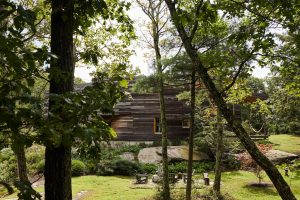
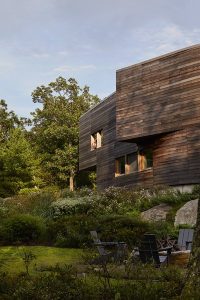
One of my favorite native plant gardens is featured this month in DWELL Magazine. In 2016 I designed and built this garden to be a soothing green on green, pollinator heaven using 98% native plant species that are deer resistant and major pollinator attractants.  The gardens were meant to enhance the extraordinary quality of the home – like a ship sailing through the forest. We used sedges as natural mulch and groundcover, bergamot bee balm, blunt-toothed mountain mint, prairie smoke, shrubby St. John’s Wort, sweetfern and fragrant sumac in a sea of native ornamental grasses: little bluestem, prairie dropseed, switchgrass and Indian grass. We also incorporated mosses, sedums, lowbush blueberry and ferns present on site to seamlessly merge the designed areas with the natural ecosystem.

As evidenced, native plant gardens are beautiful and life-sustaining.

Four years on, we still maintain this garden now mostly pulling out bee balm and mountain mint to transplant to other areas of the property. In July the bees are buzzing so loud, it is beautiful for my ears and my Soul to behold.

Dwell_KUL_BuenoHome

All photos: Pippa Drummond, courtesy of DWELL Magazine

Filed Under: Uncategorized Tagged With: catskills, native plants, pollinator gardens, pollinators

Dwell Magazine and KUL

February 12, 2020 by Karin Edmondson

Years ago as a landscape design student, I used to read Dwell Magazine on the subway totally in awe of the contemporary architecture and landscapes.

Last summer 2019, one of my gardens was featured in Dwell’s Outdoor Living Issue. Published in the May/June issue, the article entitled Woodland Skills featured the property of architect Maria Ibanez and her husband Todd Rouhe. They hired me to design a spare, beautiful landscape to help heal the scars of construction and to blend the disturbed edges back into the surrounding woodland. To accomplish this I used almost entirely native plants – three types of sedges (Carex spp.), two species of ferns, three mountain mints (Pycnanthemum spp.) and a handful of native shrubs like bayberry (Myrica pennsylvanica), gray dogwood (Cornus racemosa), sweetfern (Comptonia peregrina), bush honeysuckle (Diervella lonicera) and American elderberry (Sambucus canadensis). Almost immediately, the bees arrived on the mountain mints. Some of the deer were curious about the elder and Maria and Todd had to net those. The following year the sedges were starting to spread; so were the ferns. Mission accomplished!

Filed Under: Uncategorized

The Year Trees Came Alive

December 20, 2019 by Karin Edmondson


Everyone’s talking trees. Peter Wohlleben (forester), Suzanne Simard (biologist), Richard Powers (author), Richard Attenborough (naturalist), Melvin Sheldrake (scientist). These people from varied professions are saying the same thing:  trees are intelligent and there exist vast interconnected networks of life both above and underground . Ever heard of the Wood Wide Web? Old growth or Mother Trees provide knowledge and nutrition to the younger saplings in the forest via underground mycorrhizal fungal networks that transfer water, carbon, nitrogen and other minerals. Just because we can’t see it, doesn’t mean it isn’t happening. It is. Everything is sentient and alive, merely in its own non-human way.

To help combat Climate Chaos, nations around the world are planting large quantities of trees: Canada, Ethiopia, India, Ireland, Norway, Russia, Uganda all have accomplished major tree plantings or have a tree planting plan in the works.

Old growth forests, Mother Trees and regenerating woodland tracts are the most important as they have the age and the wisdom to pass along to younger trees. If you are a land owner considering a timber harvest, visit Healing Harvest Forest Foundation first to find out ways that our human need for forest products can co-exist with the forest’s life needs now and for the future.

If you are inspired to plant more trees but are running out of space, visit Tree Sisters and make a donation. Your money will advance their mission of planting trees to protect and expand intact forest landscapes, restore and protect watersheds and restore topsoil and land fertility.

To date, Tree Sisters has planted 4 million trees across the globe.

At the very, very least, hug a tree or thank a tree for her amazing and wonderful life.


Filed Under: Uncategorized Tagged With: fungal networks, mycorrhizae, Peter Wohlleben, Richard Attenborough, trees

Here’s to a New Year and a New KUL

December 9, 2019 by Karin Edmondson

Dear Friends and Supporters.

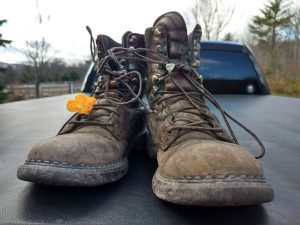
I have been designing, installing and maintaining gardens in the Catskills for eleven years now. It has been incredibly gratifying, and I have had a good run. After some serious thought and agonizing, I have decided to hang up my Redwing work boots and disengage from the installation and maintenance side of the business. I want to give my body a break while still continuing to help clients create beautiful gardens by focusing on thoughtful design, consultations and coaching. My efforts will continue to focus on sustainable, ecological and pollinator and wildlife friendly gardens with native plants at their heart and soul. Additionally, I will offer project management, nurturing a project from design through to the installation phase.

Thank you for eleven wonderful years. It has been both hard work and an absolute pleasure. I am looking forward to this next chapter.

Filed Under: Uncategorized Tagged With: garden coaching, landscape design, project management, transition

Coming Up Roses

February 12, 2019 by Karin Edmondson

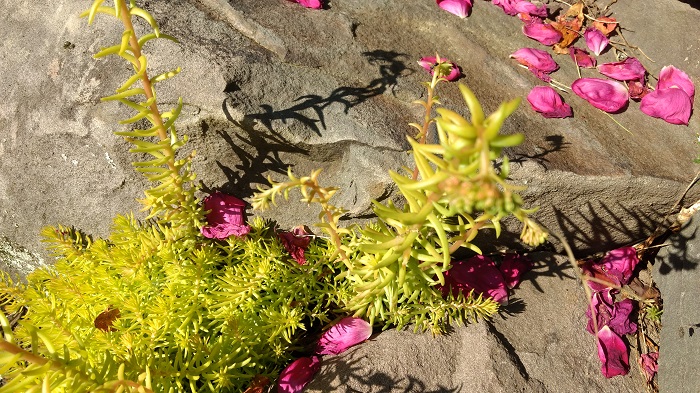
Snowy February is prime time to think of roses. Why? Because it is almost Valentine’s Day and roses are everywhere as gestures of romantic love. Years ago, in NYC’s East Village there was a place called Chez Es Saada, A Moroccan themed restaurant on two floors. The bar and entrance were on street level and access to the catacomb dining room required that one walked down a circular stone staircase strewn with rose petals. Despite not having any steady romance going on of my own at that time, I went there frequently for drinks and the rose petals which were beautiful beyond belief and a lovely gesture that added a dash of glamour and excitement to my life.

In addition to being closely connected to all things amour, shrub roses have benefits beyond bouquets and candied cake toppings. They offer love to birds and wildlife and to your pocketbook because unlike fussy English roses, they are easy to establish and maintain.

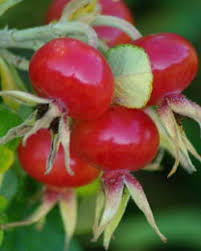
First, the ecological benefit of having shrub roses in the garden. Birds hang out, chit chat, eat and make nests in shrubs more than trees so if you are in the market for a shrub, why not make it a shrub rose? In addition to scented flowers, all shrub roses feature rose hips. These red, round fruits appear in late summer and early fall after flowering. High in both essential fatty acids and vitamin C, rose hips are coveted by turkeys, birds and other wildlife. Humans also have learned to make rose hip jam and rose hip tea. During WW II the British government collected rose hips to produce rose hip syrup rich in vitamin C as a replacement for citrus fruits which were in short supply. Rose jelly, spread on toast is a mildly sweet and earthy treat.

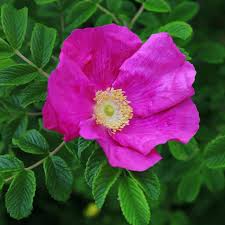
I often include roses in wild borders, hedgerows and larger more cultivated garden spaces. Specifically, rose shrubs like native Virginia Rose (Rosa virginiana), pasture rose (Rosa carolina), Prickly Rose (Rosa acicularis) and Swamp Rose (Rosa palustris). The first three are terrific for open, sunny sites – meadows, slopes and wild hedgerows that are of average to even dry garden soil. Clay? No problem. Swamp rose, as you might have guessed works well in moist situations. The flowers on all of these roses are similar – round and at about three and a half inches wide, smaller than English roses yet usually possessed of  traditional rose fragrance.

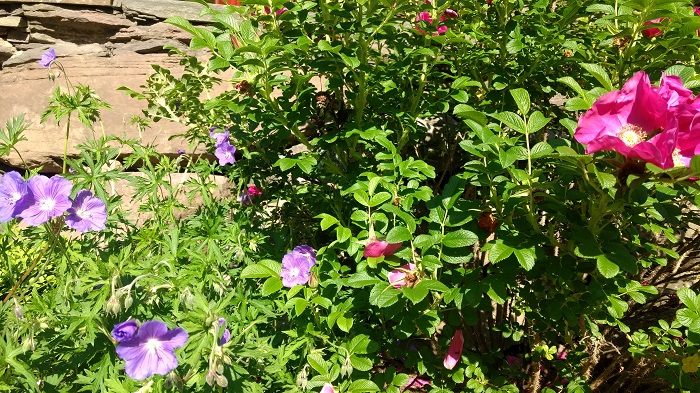
Two excellent non-native shrub roses are salt spray rose (Rosa rugosa) and the heirloom rugosa cultivar Blanc Double DeCourbet that blooms white. Both are highly fragrant. All of these shrub roses are tolerant of harsh conditions. I’ve planted the naive roses in clay and hard pan with a layer of wood chip mulch on top and once established, they have spread even in times of extreme cold and drought. The rugosa roses are tolerant of wind and salt spray. Typically, these shrub roses mature from four to eight feet tall by four to six feet wide. Hardy to Zone 4 and readily prunable (watch for the thorns) to maintain size or shape, shrub roses usually only come in white, purple or pink flowers but what they lack in bloom color diversity, they make up for in reliability and wildish romantic beauty. Available at most nurseries and locally at Catskill Native Nursery, Gallo’s of Woodstock, Augustine Nursery, Kern’s and Story’s Nursery.


Filed Under: Uncategorized Tagged With: native roses, roses, shrub roses

  • « Go to Previous Page
  • Page 1
  • Page 2
  • Page 3
  • Go to Next Page »

Member of the Ecological Landscape Alliance

917-974-9883     karin@KULandscapes.com


© 2020 Karin Ursula Edmondson.  All Rights Reserved.

Design by Stephanie Blackman Design  |  Photography by Mark Loete Photography